MB062324
1965
Language Group:Anmatyerre
Country:Ahalpere, Utopia Region, North East of Alice Springs, Northern Territory
Medium:Acrylic on Canvas and Linen
Subjects:My Mother's Awelye (Women's Ceremony) Story, Ahakeye (Bush Plum) Dreaming, Awelye (Women's Ceremony)
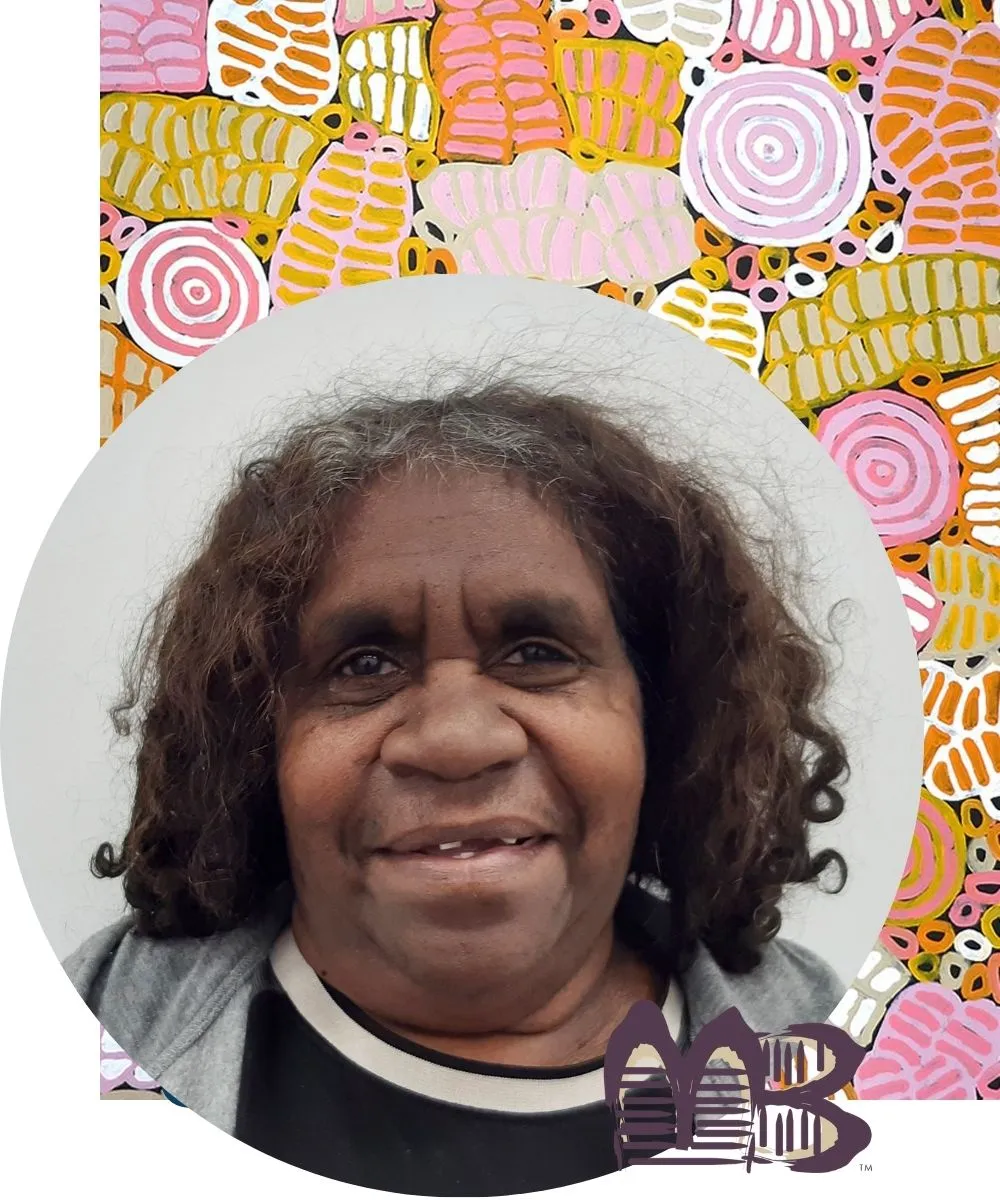
Dora Mpetyane was born in 1965 and is an Anmatyerre artist from Ahalpere Country in the Utopia region of Central Australia. She began painting for Mbantua Gallery in 2003 and continues a strong family tradition of sharing stories through art.
The daughter of the late Minnie Pwerle, Dora comes from a highly respected Utopia artistic family. Her sister, Betty Mpetyane (deceased), was a well-known artist who also painted stories passed down through their family, while her older sister Barbara Weir (deceased) was a celebrated artist whose innovative works made a significant contribution to contemporary Aboriginal art.
Before moving into acrylic painting, Dora was involved in the Utopia women's batik movement alongside more than eighty other women from the region. Her batik works were included in Utopia - A Picture Story, an important collection documenting the early development of Utopia art.
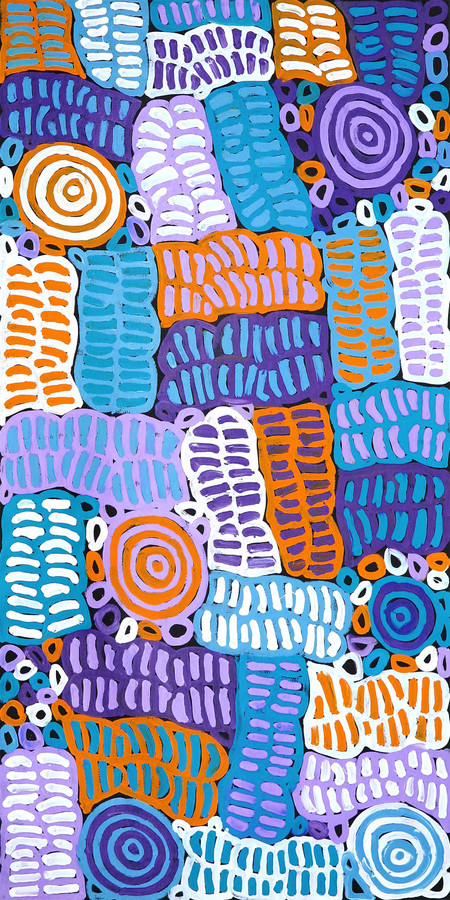
Working with acrylic on canvas and linen, Dora paints My Mothers Story, Ahakeye (Bush Plum) and Awelye (Womens Ceremony). Through her artwork, she continues to honour the stories, teachings and artistic influences passed down through her family.
Dora paints the Awelye (Women's Ceremonial Body Paint Designs) for the ancestral dreamtime stories of the Anemangkerr (Bush Melon or Tomato) which belong to her mother's country, Atnwengerrp, in the Utopia Region. Dora inherited the permission to paint this design by her mother, renowned Aboriginal artist Minnie Pwerle (deceased).
Linear designs represent Awelye. These designs are painted onto the chest, breasts, arms and thighs. Powders ground from red and yellow ochre (clays), charcoal and ash are used as body paint and applied with a flat stick with soft padding. The women sing the songs associated with their Awelye as each woman takes her turn to be 'painted-up'. Women perform Awelye ceremonies to demonstrate respect for their country and the total well-being and health of their community.