



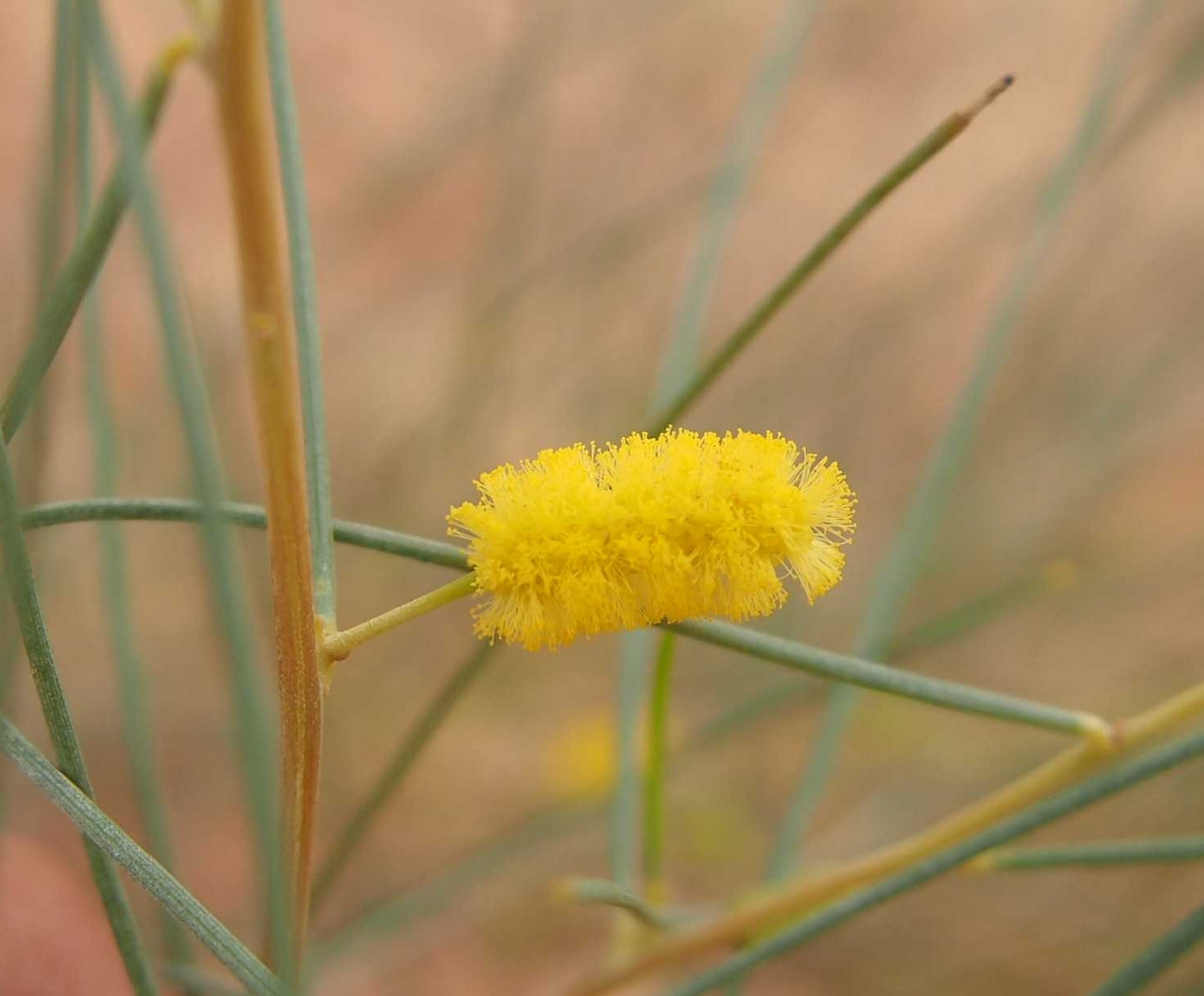
Photo by Mark Marathon via Wikipedia, used under CC BY-SA 4.0.
Bush Medicine Leaf (Antywerleny Shrub)
Discover the meaning of Bush Medicine Leaf paintings in Utopia art, the properties of the traditional antywerleny shrub, and the flowing artwork styles of Abie Loy Kemarre.
Botanical & Cultural Profile
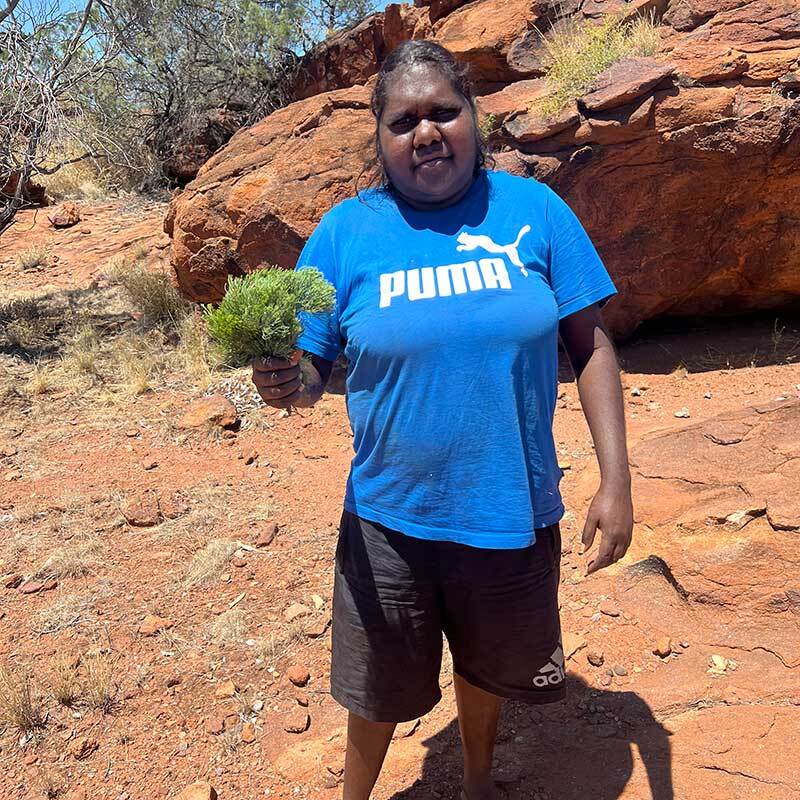
The Bush Medicine Leaf story painted by Utopia artists depicts the leaves of the Acacia Tenuissima (known locally as Antywerleny) plant, a medicinal Acacia shrub that grows throughout the artists' Country in the Utopia region of Central Australia. For generations, Alyawarre and Anmatyerre women have gathered the leaves of this shrub and prepared traditional remedies using knowledge passed down through their families.
Traditionally, the leaves were gathered fresh from the shrub and prepared in several ways. They could be soaked in water to create a medicinal wash used to cleanse cuts, sores and skin irritations, or crushed and mixed with animal fat to form an ointment that could be applied directly to the skin. The leaves were also sometimes heated or steeped to release their medicinal properties before being used to help treat minor burns, wounds and other common ailments. The preparation and use of bush medicines formed an important part of everyday life, providing practical healthcare in remote desert environments long before access to modern medicine.
Artistic Style: The Flowing Leaf
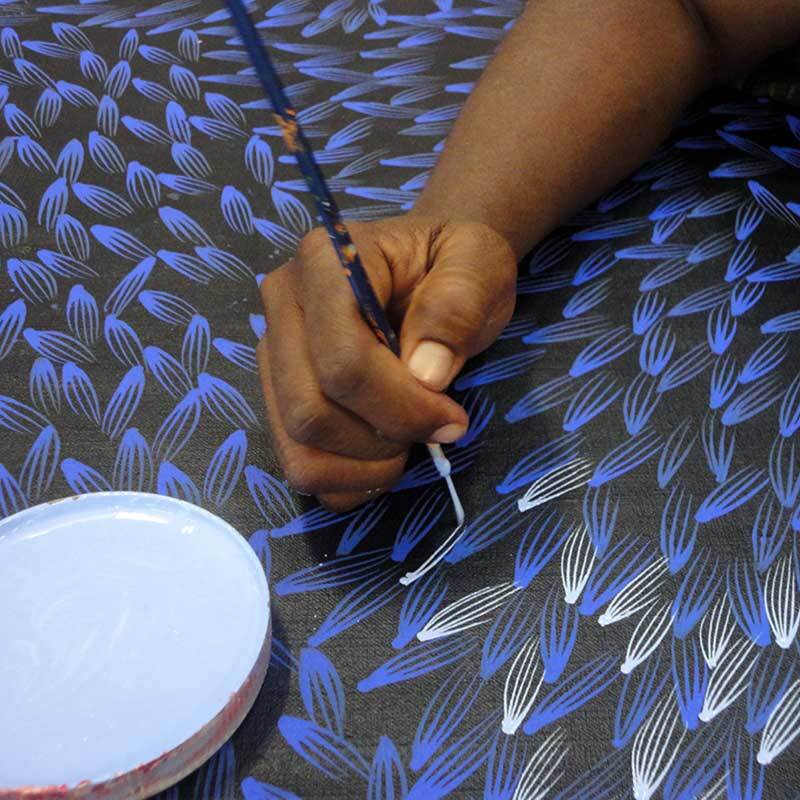
Abie Loy Kemarre paints in this distinctive Bush Medicine Leaf style. Inspired by the Antywerleny shrub from her Country, Abie creates mesmerising compositions using countless fine, flowing brushstrokes that move rhythmically across the canvas. Rather than relying on traditional symbolic forms, her paintings capture the natural movement of Bush Medicine leaves as they sway in the desert breeze or dry beneath the Central Australian sun.
Abie learned the foundations of this story and artistic practice from her renowned grandmother, Kathleen Petyarre, one of Australia's most celebrated Aboriginal artists. While honouring this important family legacy, Abie has developed her own highly refined contemporary style - the result is a body of work that beautifully conveys the energy, movement and spirit of Country.