



Aboriginal Weapons & Tools
Traditional Weapons, Tools and Cultural Knowledge
Aboriginal Weapons & Tools
For tens of thousands of years, Aboriginal people across Central Australia have made weapons and tools from the natural materials available on Country, including hardwood, vine, stone, spinifex resin and animal sinew. These objects were carefully designed for hunting, gathering, protection, ceremony and everyday life, with knowledge of their construction and use passed down through generations.
Among the most recognised traditional weapons and tools are hunting spears, spear throwers or woomeras, boomerangs, shields and clubs. While each object had a practical purpose, many also held cultural significance and reflected the skills, knowledge and traditions of the people who made and used them.
Hunting Spears
Hunting spears were traditionally made from strong, flexible materials such as Tecoma vine. Because the vines naturally grow with curves and bends, the maker would carefully heat and shape the green vine over a small fire to straighten it and create the desired form.
A wooden barb could be attached to the spearhead using kangaroo or emu sinew, while the opposite end was shaped to fit into a spear thrower. Spears made in this way could reach approximately 270 centimetres in length and were used for hunting and other purposes depending on the cultural context.
Spear Throwers & Woomeras
A spear thrower, also known as a woomera or miru, is traditionally made from hardwood such as mulga. Its primary purpose is to provide additional leverage when throwing a spear, allowing the spear to travel much further and with greater force than could be achieved by hand alone.
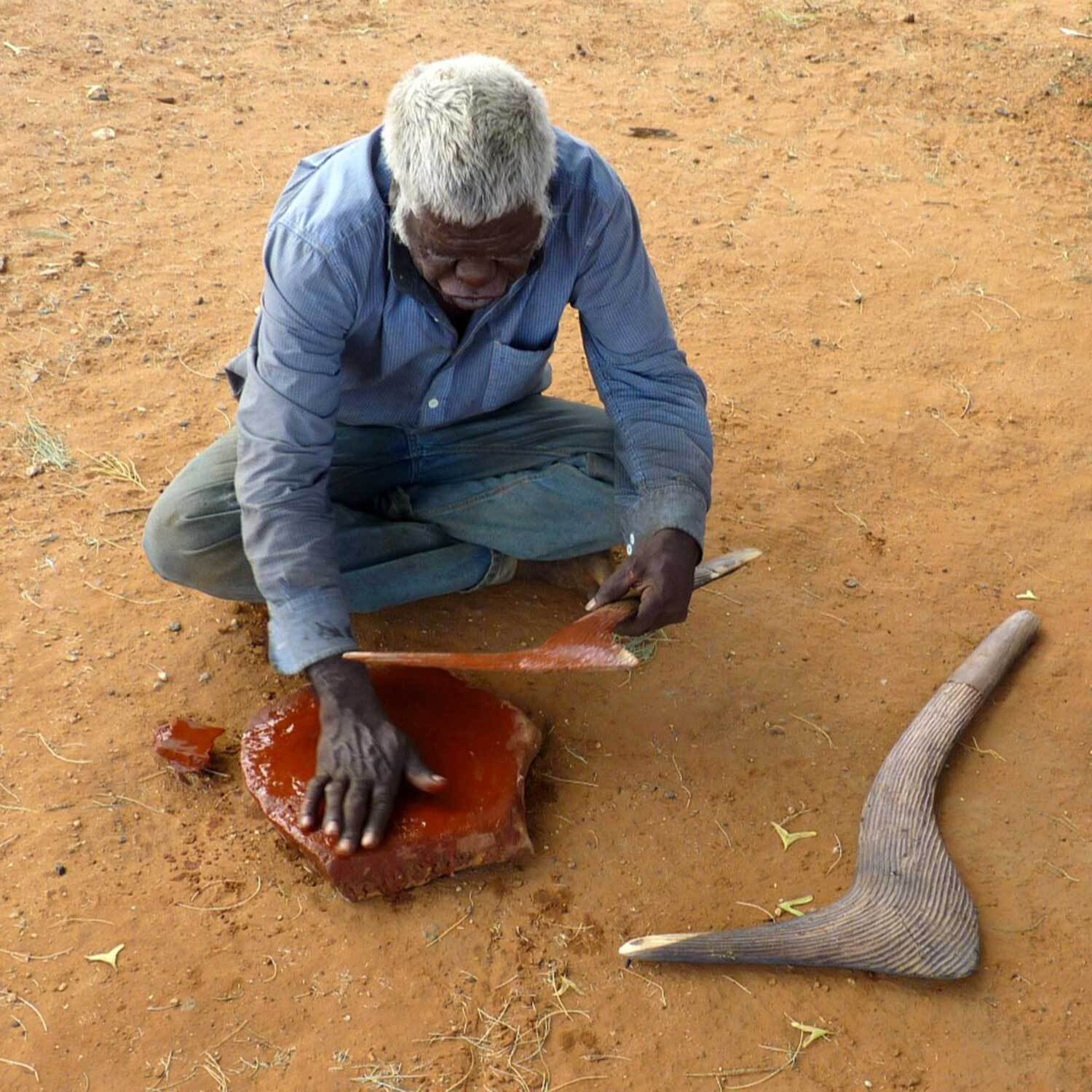
The spear is positioned against a small peg at the end of the thrower and launched using the extended length of the woomera as a lever. Many spear throwers also have a handle made with spinifex resin, which could incorporate a sharp piece of quartz. This provided a useful cutting and shaping tool and demonstrates the multifunctional nature of many Aboriginal implements.
Woomeras could also have other practical and cultural uses, including preparing ochre, making fire, working materials and participating in ceremonies. Their design and construction vary between regions and cultural groups.
Shields
Traditional shields were generally carved from hardwood, including mulga and other suitable timber species. They were made using relatively simple tools and carefully shaped to provide protection during conflict and other activities.
Shields could also have ceremonial and cultural significance. Their shape, surface treatment and decoration vary between Aboriginal communities and regions, with some featuring carved designs, fluting or other traditional markings while others have a more natural, smooth finish.
Boomerangs
Boomerangs are among the best-known Aboriginal implements and have been made in many different forms for different purposes. Depending on their design and the community in which they were made, boomerangs could be used for hunting, fighting, ceremony and other practical activities.
Not all Aboriginal boomerangs are designed to return to the thrower. Many were made to travel in a particular direction and were used as hunting or fighting implements. Other forms could also be used as digging implements, tools or musical instruments.
Clubs
Clubs, sometimes referred to as nulla nulla, were traditionally made from hardwood such as mulga. They vary considerably in shape, size and design according to their intended use and the region in which they were made.
Some clubs were fire-hardened to increase their strength, while others incorporated sharp quartz pieces secured with spinifex resin. Clubs could be used for hunting, fighting, ceremonies and a variety of practical tasks, including digging and working other materials.
Knowledge Passed Through Generations
Traditional Aboriginal weapons and tools demonstrate an extraordinary understanding of the natural environment and the materials found on Country. The process of selecting materials, shaping and hardening timber, attaching stone or other components and using each object effectively requires detailed knowledge developed over generations.
These objects are therefore more than practical implements. They represent the knowledge, resourcefulness and cultural traditions of Aboriginal peoples and provide an important connection to Country, history and continuing cultural practices.