Artwork Story
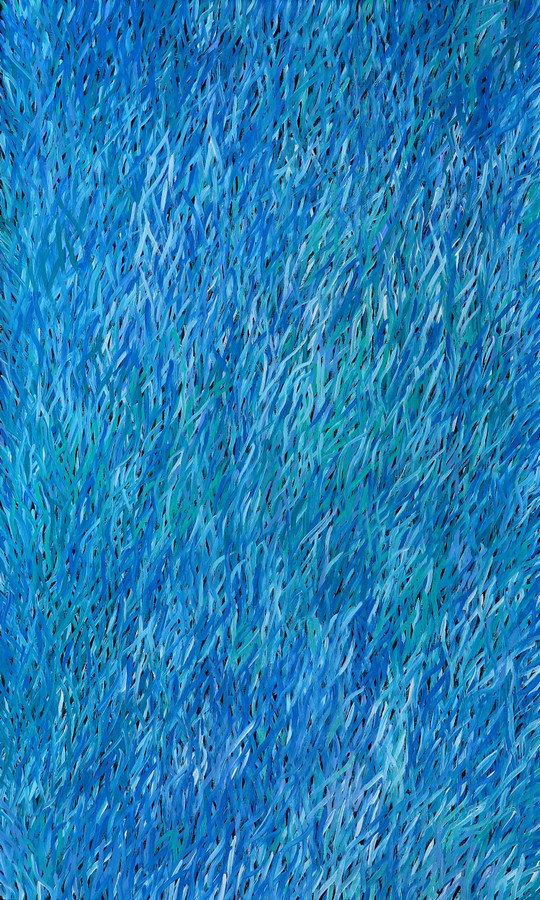
Barbara's painting depicts Grass Seed Dreaming.
Brush strokes overlap and weave to create a swaying effect like the movement of native grass. The grass seed, which is ground and made into damper, is an important staple food of the traditional Aboriginal people.
Barbara Weir
1940
Deceased:2023
Language Group:Anmatyerre and Alyawarre
Country:Atnwengerrp, Utopia Region, North East of Alice Springs, Northern Territory
Medium:Acrylic on Canvas and Linen
Subjects:Awelye (Women's Ceremony), Beginning of Creation, Burning Grass, Creation of My Mother's Country, Creation of My Mother's Dreamtime, Dancing Lines, Grass Seed Dreaming, My Country, My Mother's Country, Sunrise of My Mother's Country
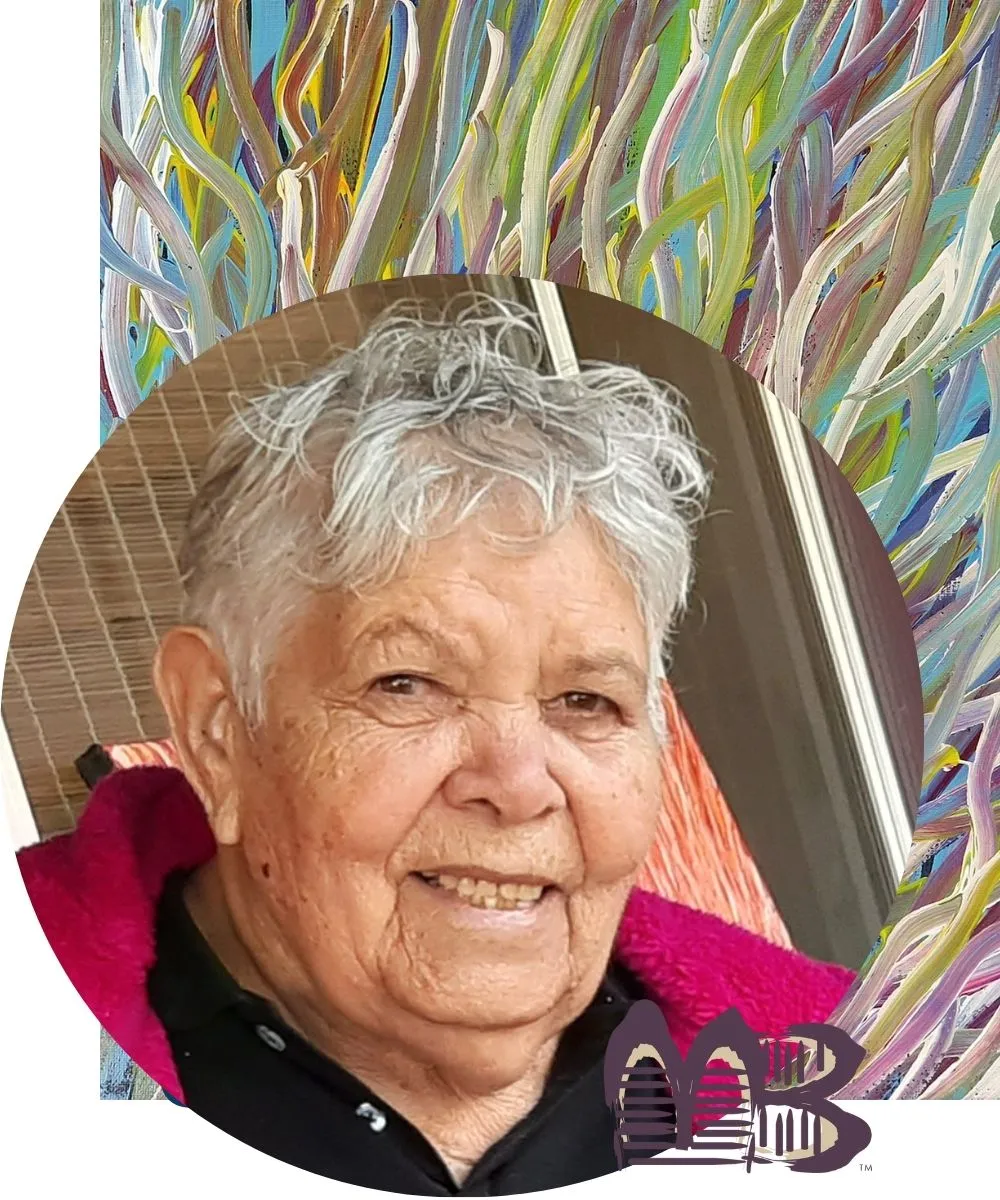
Barbara Weir (1940-2023) was an Anmatyerre and Alyawarre artist from Atnwengerrp in the Utopia region of Central Australia. She was born at Derry Downs Station, the daughter of renowned Utopia artist Minnie Pwerle (deceased) and Jack Weir. She was also raised by her aunt, the celebrated artist Emily Kame Kngwarreye (deceased), who played an important role in her early life.
As a child, Barbara was separated from her family and became part of the Stolen Generations. After many years away, she returned to Utopia in the late 1960s with her children and began the journey of reconnecting with her family, Country and culture. Over time, she relearned Anmatyerre and Alyawarre languages and rebuilt the cultural connections that shaped her life and artwork.
Barbara began developing her artistic practice after returning to Utopia and was inspired by her relationship with Emily Kame Kngwarreye. Working with acrylic on canvas and linen, she became known for her distinctive Grass Seed Dreaming paintings, created with flowing brushstrokes inspired by the Lyaw grass found in Utopia, as well as her intricate My Mother's Country works featuring detailed dotwork and layered representations of Country.
Throughout her career, Barbara exhibited widely in Australia and internationally, with her artwork gaining recognition from collectors around the world. Her paintings share important stories including Grass Seed Dreaming, My Mother's Country, Creation of My Mother's Country, Beginning of the Creation and My Place, leaving a lasting legacy as one of Utopia's most significant artists.
COLLECTIONS
AMP Collection, Melbourne, VIC
COLLECTIONS
Art Gallery of South Australia, Adelaide, SA
COLLECTIONS
Ebes Collection, Workum, The Netherlands
COLLECTIONS
Mbantua Gallery Collection, Alice Springs, NT
COLLECTIONS
Queensland College of Art, Griffith University, QLD
COLLECTIONS
University of Adelaide, Adelaide, SA
COLLECTIONS
Art Gallery of Queensland, Brisbane, QLD
COLLECTIONS
Artbank, Sydney, NSW
COLLECTIONS
National Gallery of Victoria, Melbourne, VIC
COLLECTIONS
The Holmes à Court Collection, Perth, WA
EXHIBITIONS
EXHIBITIONS
EXHIBITIONS
EXHIBITIONS
EXHIBITIONS
EXHIBITIONS
EXHIBITIONS
EXHIBITIONS
EXHIBITIONS
EXHIBITIONS
EXHIBITIONS
EXHIBITIONS
EXHIBITIONS
EXHIBITIONS
EXHIBITIONS
EXHIBITIONS
EXHIBITIONS
EXHIBITIONS
EXHIBITIONS
EXHIBITIONS
EXHIBITIONS
EXHIBITIONS
EXHIBITIONS
EXHIBITIONS
EXHIBITIONS
EXHIBITIONS
EXHIBITIONS
EXHIBITIONS
EXHIBITIONS
EXHIBITIONS
EXHIBITIONS
EXHIBITIONS
EXHIBITIONS
EXHIBITIONS
EXHIBITIONS
EXHIBITIONS
EXHIBITIONS
EXHIBITIONS
EXHIBITIONS
EXHIBITIONS
EXHIBITIONS
EXHIBITIONS
EXHIBITIONS
EXHIBITIONS
EXHIBITIONS
EXHIBITIONS
EXHIBITIONS
EXHIBITIONS
REFERENCES
REFERENCES
- Artist Name:
- Barbara Weir
- Artwork Size:
- 150 x 90cm
- Medium:
- Acrylic on Linen
- Year Painted:
- 2022
- Title:
- Grass Seed Dreaming
- Free Shipping Worldwide!:
- This painting on linen will be shipped in a cylinder to you free of charge, worldwide! An option to have this painting 'stretched' onto a wooden frame may be available. If selected, further charges will apply and will be calculated at checkout.