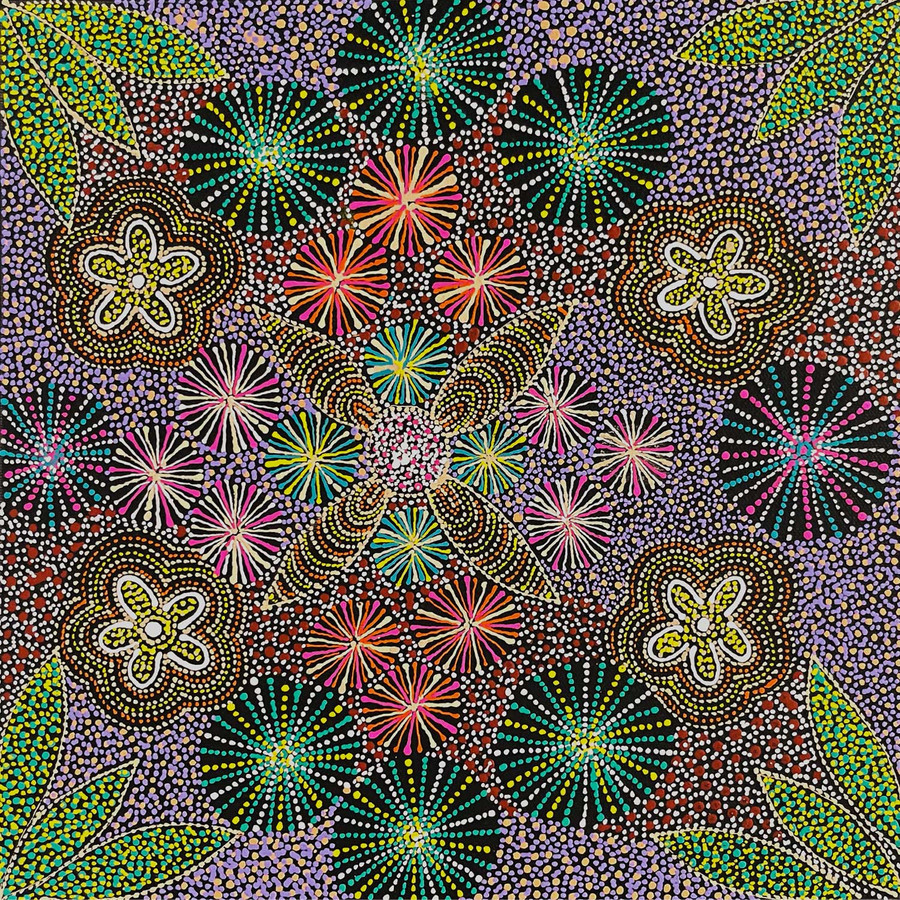
Artwork Story
Susan paints Awelye (Women's Ceremonial and Body Paint Designs) for Sugarbag. Sugarbag is the bush honey of Australian native bees. Bush honey can be found in the trees in her country.
Linear designs represent Awelye. These designs are painted onto the chest, breasts, arms and thighs. Powders ground from red and yellow ochre (clays), charcoal and ash are used as body paint and applied with a flat stick with soft padding. The women sing the songs associated with their Awelye as each woman takes her turn to be 'painted-up'. Women perform Awelye ceremonies to demonstrate respect for their country and the total well-being and health of their community.
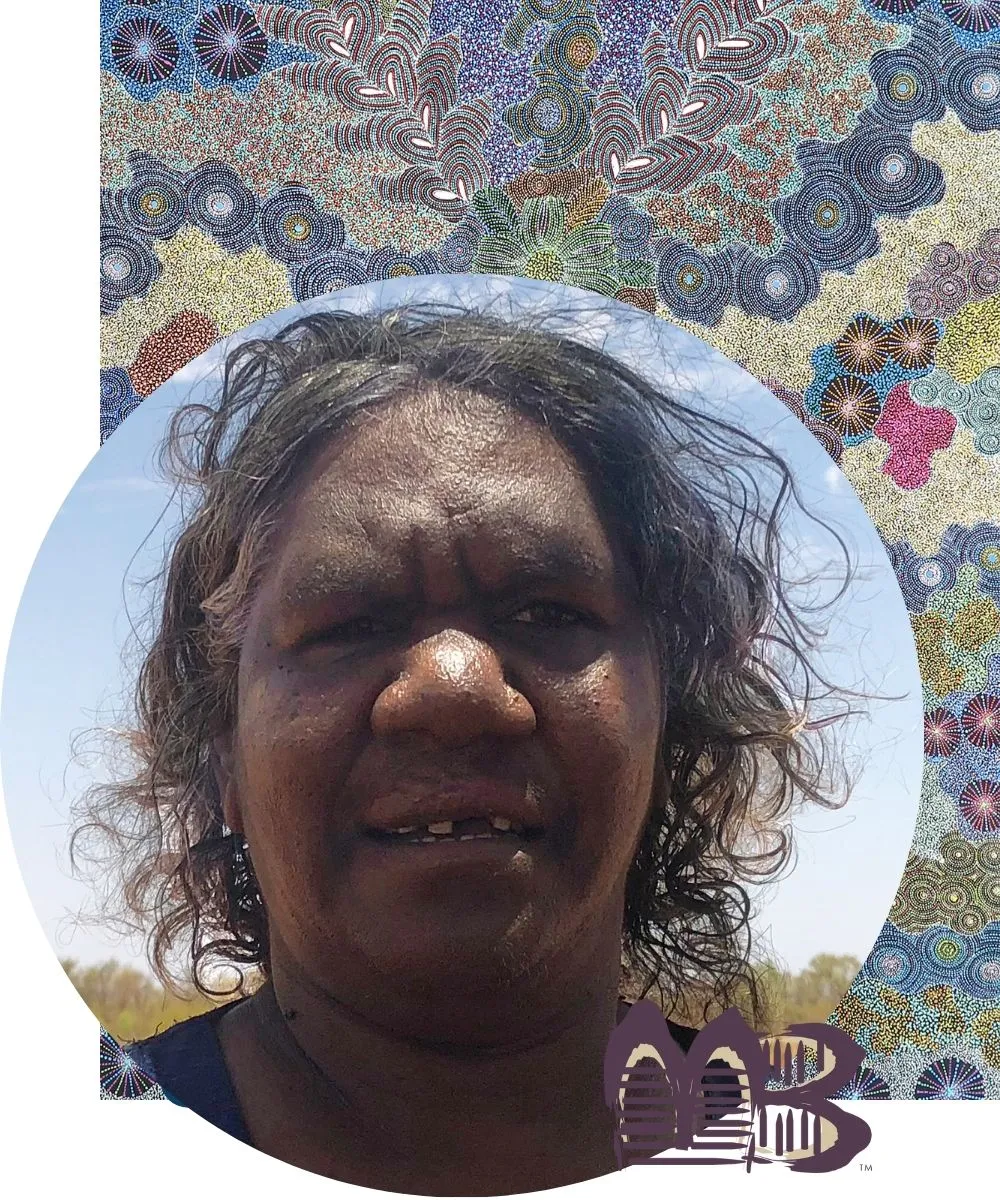
Susan Hunter Petyarre
1969
Language Group:Alyawarre
Country:Arawerre (Soapy Bore), Utopia Region, North East of Alice Springs, Northern Territory
Medium:Acrylic on Canvas and Linen, Batik on Silk
Subjects:Sugarbag (Native Honey), Awelye (Women's Ceremony), Women's Story, Awelye (Women's Ceremony) for Sugarbag (Native Honey)
Susan Hunter Petyarre is an Alyawarre artist connected to Arawerre (Soapy Bore) Country in the Utopia region of Central Australia.
Susan comes from a highly respected Utopia artistic family. She is the daughter of the late renowned artist Molly Pwerle, one of the celebrated Pwerle sisters alongside the late Minnie Pwerle, Emily Pwerle and the late Geyla Pwerle, whose paintings have become an important part of Australian Indigenous art history. Her siblings Annie and Jessie, along with her late brother Sandy Hunter Petyarre, are also recognised artists.
Growing up surrounded by painting, cultural stories and family traditions, Susan developed her own artistic practice while continuing the strong legacy of sharing Country through art. She was involved in the Utopia Women's Batik movement, with her early batik works included in Utopia - A Picture Story, a significant project documenting the work of Utopia women artists.
Working across batik and acrylic on canvas and linen, Susan is known for her refined dot work and delicate patterns. Her paintings share Awelye (women's ceremony), Native Honey (Sugar Bag) and women's stories connected to Arawerre and Atnwengerrp Country, reflecting the cultural knowledge and traditions passed down through generations.
COLLECTIONS
Mbantua Gallery Collection, Alice Springs, NT
COLLECTIONS
The Holmes à Court Collection, Perth, WA
EXHIBITIONS
EXHIBITIONS
EXHIBITIONS
EXHIBITIONS
EXHIBITIONS
EXHIBITIONS
EXHIBITIONS
EXHIBITIONS
EXHIBITIONS
EXHIBITIONS
EXHIBITIONS
EXHIBITIONS
EXHIBITIONS
EXHIBITIONS
EXHIBITIONS
EXHIBITIONS
EXHIBITIONS
EXHIBITIONS
EXHIBITIONS
EXHIBITIONS
EXHIBITIONS
EXHIBITIONS
EXHIBITIONS
EXHIBITIONS
EXHIBITIONS
EXHIBITIONS
EXHIBITIONS
EXHIBITIONS
EXHIBITIONS
EXHIBITIONS
REFERENCES
REFERENCES
REFERENCES
REFERENCES
REFERENCES
REFERENCES
- Artist Name:
- Susan Hunter Petyarre
- Artwork Size:
- 30 x 30cm
- Medium:
- Acrylic on Canvas
- Year Painted:
- 2026
- Title:
- Awelye (Women's Ceremony) for Sugarbag (Native Honey)
- Free Shipping Worldwide!:
- This painting on canvas will be shipped in a cylinder to you free of charge, worldwide! An option to have this painting 'stretched' onto a wooden frame may be available. If selected, further charges will apply and will be calculated at checkout.