


SP10680
1977
Language Group:Anmatyerre
Country:Ilkawerne (El-go-an-na), Utopia Region, North East of Alice Springs, Northern Territory
Medium:Acrylic on Canvas and Linen
Subjects:Alpar (Rat-Tail Plant) Story, Awelye (Women's Ceremony), Ntang Artety (Mulga Seed) Dreaming, Ahakeye (Bush Plum) Dreaming, Awelye (Women's Ceremony) for Alpar (Rat-Tail Plant), Awelye (Women's Ceremony) for Alpar (Rat-Tail Plant) and Ahakeye (Bush Pl
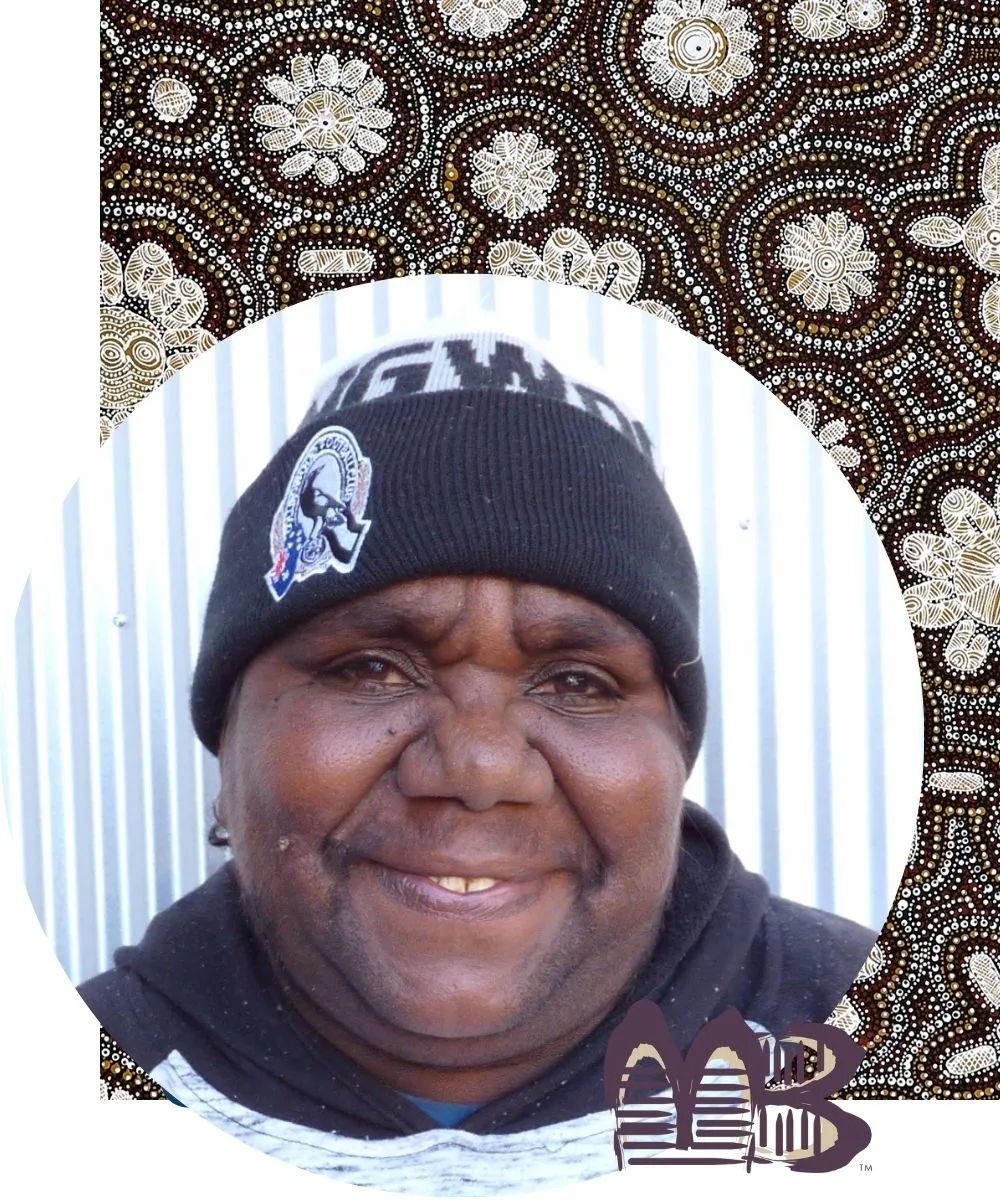
Rosemary Bird Mpetyane is an Anmatyerre artist connected to Ilkawerne Country in the Utopia region of Central Australia. Rosemary comes from a respected family of Utopia artists. She is the daughter of the late Paddy Bird and Eileen Bird, and the granddaughter of the late Ada Bird Petyarre, one of Utopia's highly respected senior artists.
Growing up surrounded by family, Country and culture, Rosemary has been taught the stories, songs and dances connected to Ilkawerne Country. Her artwork reflects this deep cultural connection through paintings of Alpar (Rat-tail Plant), Awelye (women's ceremony), Ntang Artety (Mulga Seed) and Ahakeye (Bush Plum).
Working in acrylic on canvas and linen, Rosemary continues to develop her own artistic style while honouring the knowledge and traditions passed down through generations of her family. She lives in the Utopia region with her husband Clifford Tilmouth, their children and extended family.
Rosemary paints Awelye (Women's Ceremonial and Body Paint Designs) for Alpar, the rat-tail goosefoot or green crumbweed plant, is a small, erect herb that is sticky to touch and scented heavily of citrus. Growing especially well in Mulga tree communities, it is found in abundance in Rosemary's home in the Utopia Region, north east of Alice Springs.
Linear designs represent Awelye. These designs are painted onto the chest, breasts, arms and thighs. Powders ground from red and yellow ochre (clays), charcoal and ash are used as body paint and applied with a flat stick with soft padding. The women sing the songs associated with their Awelye as each woman takes her turn to be 'painted-up'. Women perform Awelye ceremonies to demonstrate respect for their country and the total well-being and health of their community.