



Artwork Story
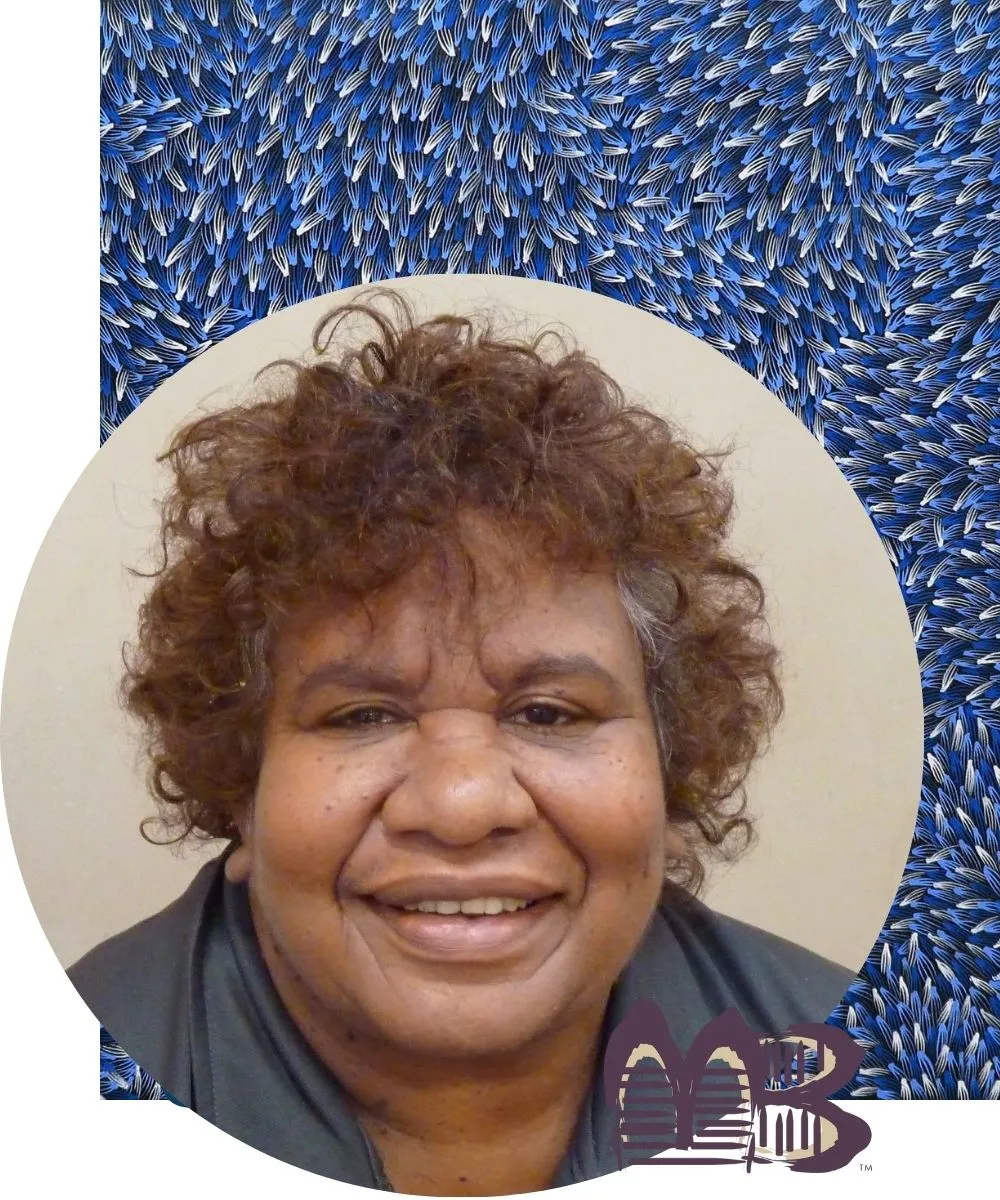
Abie depicts the leaf of the antywerleny (Acacia Tenuissima), a type of wattle. The leaves of the antywerleny are crushed and mixed with animal fat for use as a medicinal ointment, or soaked in water to make a medicinal wash.
Abie Loy Kemarre
1972
Language Group:Anmatyerre
Country:Iylentye (Mosquito Bore), Utopia Region, North East of Alice Springs, Northern Territory
Medium:Acrylic on Canvas and Linen, Batik on Silk
Subjects:Bush Medicine Leaf, Bush Turkey, Akatyerre (Desert Raisin), Awelye (Women's Ceremony), Bush Hen, River, Awelye (Women's Ceremony) for Akatyerre (Desert Raisin), Awelye (Women's Ceremony) for Bush Medicine
Abie Loy Kemarre was born in 1972 and is an Anmatyerre artist from Ilyentye (also known as Ahalpere) in the Utopia region, northeast of Alice Springs. She is the eldest of five children born to Margaret Loy Pula and Ray Loy Pula, and comes from a highly respected family of artists. Her grandmother Kathleen Petyarre (deceased) and aunt Gloria Petyarre (deceased) were both celebrated artists and members of the renowned seven Petyarre sisters.
Abie began her artistic journey in the early 1990s under the guidance of her grandmother Kathleen Petyarre, who taught her the techniques of fine dotwork painting. Abie developed her own distinctive style, combining bold shapes and thick lines with carefully applied fine dots to create detailed and intricate designs. She creates her fine dotwork using small applications of paint, building each artwork with patience and precision.
Working with acrylic on canvas and linen, Abie paints important stories connected to her Country, including Bush Medicine Leaf, Bush Turkey, Akatyerre (Desert Raisin or Bush Tomato), and Awelye (Women's Ceremony and Body Paint Designs). Her artworks reflect her deep connection to Country and the cultural knowledge passed down through her family.
Abie's talent and dedication have gained recognition throughout Australia and internationally. She has been a finalist in the Telstra National Aboriginal and Torres Strait Islander Art Award in 1997 and 2001, and her artworks are held in major collections around the world. Earlier in her career, she also worked with silk batik, with these works being exhibited internationally. Mbantua Gallery has supported Abie's artistic journey from the early stages of her career and continues to celebrate the development of her unique style.
COLLECTIONS
Mbantua Gallery Collection, Alice Springs, NT
EXHIBITIONS
EXHIBITIONS
EXHIBITIONS
EXHIBITIONS
EXHIBITIONS
EXHIBITIONS
EXHIBITIONS
EXHIBITIONS
EXHIBITIONS
EXHIBITIONS
- Artist Name:
- Abie Loy Kemarre
- Artwork Size:
- 60 x 45cm
- Medium:
- Acrylic on Canvas
- Year Painted:
- 2026
- Title:
- Bush Medicine Leaf
- Free Shipping Worldwide!:
- This painting on canvas will be shipped in a cylinder to you free of charge, worldwide! An option to have this painting 'stretched' onto a wooden frame may be available. If selected, further charges will apply and will be calculated at checkout.


